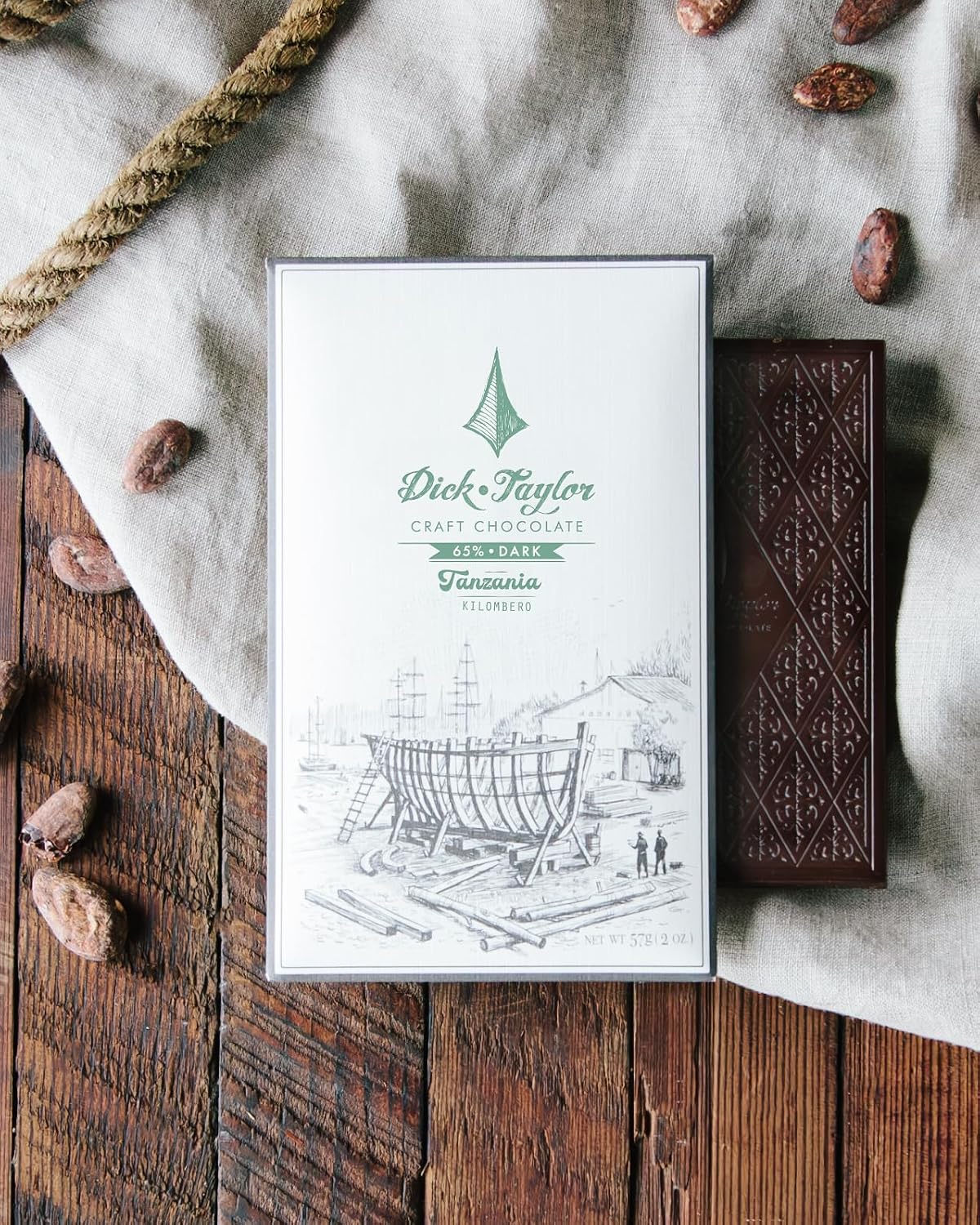
You hand someone a chocolate bar and they say, “Oh, thank you — I love chocolate.” Then they eat it the same way they’d eat a Hershey’s Kiss. That’s not their fault. Most people have never been given a reason to slow down and actually taste chocolate. Bean-to-bar craft chocolate — meaning chocolate made by a single producer who controls the process all the way from raw cacao bean to finished bar, rather than just melting and molding bulk couverture — is one of the few foods where a well-chosen gift set can genuinely rewire how someone experiences an everyday ingredient. The best sets do this with intention: different origins, different cacao percentages, printed tasting notes, and sometimes a short guide on how fermentation (the microbial process that develops flavor in cacao, just as it does in wine grapes or aged cheese) shapes what ends up on the palate. This guide helps you find those sets — and skip the ones that are just pretty boxes of expensive mediocrity.
Why the “Educational” Label Gets Misused (And What to Look For Instead)
The phrase “tasting flight” has been attached to enough underwhelming gift boxes that it’s worth establishing a baseline. A genuinely educational chocolate set does at least three things:
1. It varies origin, not just percentage. Tasting a 70% Ecuador bar next to a 70% Madagascar bar reveals that cacao percentage is almost irrelevant to flavor complexity — it’s terroir (the French term for the combination of soil, climate, and growing conditions that gives a place its character) and fermentation protocol that drive the difference. Sets that only vary percentage (60%, 72%, 85%) from a single undisclosed origin teach nothing about chocolate; they just teach tolerance for bitterness.
2. It includes producer transparency. The best sets name the cacao farm or cooperative, the country, and often the harvest season. That’s the equivalent of a vintage date on wine. Per Saveur’s guide to single-origin chocolate, harvest year matters because cacao flavor profiles shift with rainfall patterns, fermentation duration, and even post-harvest drying conditions. A gift set that lists “Ecuador” without further detail is giving you about as much information as a wine label that says “Europe.”
3. It provides a structured tasting mechanism. This can be a printed card, a booklet, a QR code to a guided audio tasting, or — in the best cases — a tasting wheel specific to cacao. The Fine Chocolate Industry Association’s 2025 State of the Industry Report notes that consumer retention (meaning the likelihood someone becomes a repeat craft-chocolate buyer) is significantly higher when a first purchase includes some form of guided sensory scaffolding. The gift set is the on-ramp; the packaging is the curriculum.
The Producers Worth Anchoring Your Search To
You don’t need to survey the entire craft chocolate landscape to find a great gift set. A handful of producers have built their reputations specifically around educational presentation and sourcing transparency. Here’s where reviewers and industry observers consistently land:
Dandelion Chocolate (San Francisco) is the reference producer for this conversation. Their single-origin bars — sourced from farms in Madagascar, Tanzania, Belize, and elsewhere — are each packaged with detailed origin cards that explain fermentation protocol, drying method, and flavor expectations. Bon Appétit has repeatedly cited Dandelion as the standard for transparency in American bean-to-bar chocolate. Their gift sets, which typically run $55–$95 depending on the number of bars and any included accessories, are built explicitly around comparative tasting. If you’re choosing a single gift set for someone who has never deliberately tasted craft chocolate before, the Dandelion origin flight is the closest thing to a guaranteed success.
Raaka Chocolate (Brooklyn) takes a different pedagogical angle: they work with unroasted cacao, which means the flavor profiles are brighter, fruitier, and more volatile than conventionally roasted chocolate. Eater’s roundup of American bean-to-bar makers consistently highlights Raaka as a distinct experience specifically because of this processing choice. Their “First Nibs” subscription sets (also available as one-time gift boxes) are designed as a structured introduction to how roasting alters flavor — a comparison that teaches something even experienced chocolate buyers find surprising. Sets typically fall in the $45–$75 range.
Fruition Chocolate Works (Woodstock, NY) is a smaller operation that wins on ingredient sourcing specificity — their cacao sourcing notes read more like a sommelier’s vintage report than typical chocolate marketing. Serious Eats has noted Fruition’s transparency around fermentation variables as unusually detailed for a domestic producer at their scale. Their gift assortments ($50–$85) include bars that span multiple origins and occasionally include a single-ingredient bar (cacao + sugar only, no added cocoa butter or vanilla) that serves as a useful baseline for tasting everything else against.
Valrhona (France) occupies a different tier — they’re a bulk couverture supplier to professional pastry kitchens that also produces retail bars. Their “Les Confections” discovery boxes and their Grand Terroir collection are not bean-to-bar in the strictest sense (they work with cacao cooperatives rather than controlling farm-level processing), but their origin-specific bars are meticulously documented and serve as an excellent comparison point for understanding how a large, technically sophisticated producer manages flavor consistency. For culinary professionals or prosumer buyers who want a gift set with immediate pastry-kitchen credibility, Valrhona’s presentation is hard to beat. Sets run $45–$110 depending on configuration.
By the Numbers
| Price range | What you’re typically getting |
|---|---|
| $25–$45 | 3–5 bars, basic origin labeling, minimal tasting guidance |
| $46–$75 | 4–8 bars, detailed origin cards, comparative framing by the producer |
| $76–$120 | 6–12 bars + tasting accessories (wheel, notebook, sometimes a guided video), premium packaging |
| $120+ | Curated collector sets, rare single-estate bars, or subscription-format education programs |
The sweet spot for educational value relative to spend, based on aggregated reviewer consensus across Bon Appétit, Serious Eats, and Eater coverage, is the $55–$85 range — enough bars to run a meaningful comparative tasting, enough producer investment to include real guidance.
The Tradeoffs You Should Name Before You Buy
This is where most gift guides stop short. Let’s be explicit about what you’re actually choosing between:
Depth vs. breadth. A set with twelve bars from twelve origins gives the recipient a survey course. A set with four bars from four origins — each with a full producer writeup and tasting note card — gives them a seminar. For someone who is brand-new to craft chocolate, the survey is overwhelming and teaches less than the seminar. For someone who is already buying single-origin bars on their own, the survey is more useful. Know which situation you’re in.
Producer story vs. flavor range. Dandelion’s sets are anchored to a single house style — minimal processing, letting origin speak. That produces a coherent story but a narrower flavor range. A curated multi-producer set (some specialty food retailers and subscription services assemble these) can include bars that range from fruit-forward unroasted Raaka to the deep, roasted-nut character of a Fruition 85% — a wider educational arc, but no single producer’s narrative running through it. Per Saveur’s single-origin guide, the multi-producer approach is better for people who want to understand the category; the single-producer flight is better for understanding one maker’s philosophy.
Freshness. This is underemphasized. Craft chocolate is not shelf-stable indefinitely. Most bean-to-bar producers recommend consuming within 12–18 months of the production date, and flavor degradation in high-percentage dark chocolate accelerates after opening. Bars stored in a warm warehouse before assembly into a gift box may arrive with six to eight months of optimal flavor remaining. Ask retailers about lot dates when purchasing curated sets, especially for bars from smaller producers with lower inventory turnover. This is the equivalent of checking harvest dates on finishing oil — it matters.
The subscription vs. one-time gift question. For a recipient who is actively building chocolate literacy, a two- or three-month subscription to a service like Compartés or a direct producer subscription from Dandelion or Raaka delivers the comparative experience over time rather than all at once. That pacing is pedagogically superior — you can’t absorb twelve origins in one sitting. The tradeoff is that subscriptions require the recipient to engage repeatedly, which not everyone does. A one-time set with excellent packaging has a higher probability of actually getting opened and engaged with at the moment of gifting.
The Decision Rule
If your recipient has never deliberately compared two craft chocolate bars side by side: start with a Dandelion or Fruition origin flight in the $55–$85 range. The producer story is coherent, the origin cards do the teaching for you, and the flavor differences between origins are dramatic enough to produce a genuine “I didn’t know chocolate could taste like this” moment.
If your recipient already buys craft chocolate but hasn’t explored processing variables (roasting, fermentation duration, conching time): the Raaka “First Nibs” set or a multi-producer curated flight is the right move. You’re expanding their frame, not introducing them to the category.
If you’re buying for a culinary professional or a serious home entertainer who will use this in a menu or cheese-board context: Valrhona’s Grand Terroir collection gives you origin specificity with pastry-kitchen credibility — the bars are documented well enough to inform a pairing decision and impressive enough to put on a table without explanation.
If you’re uncertain and the budget is flexible: prioritize producers who name the farm, the harvest year, and the fermentation protocol over producers who name only the country. That single filter eliminates most of the beautiful-but-vague gift sets that look educational and aren’t.
The goal of a good chocolate gift set is not to impress someone with the packaging. It’s to give them one clear, surprising moment — a Madagascar bar that tastes like raspberry and red wine, a Belize bar that tastes like dried fig and tobacco — that makes them realize they’ve been eating a much simpler version of something for their whole life. The best sets engineer that moment deliberately. They’re worth finding.