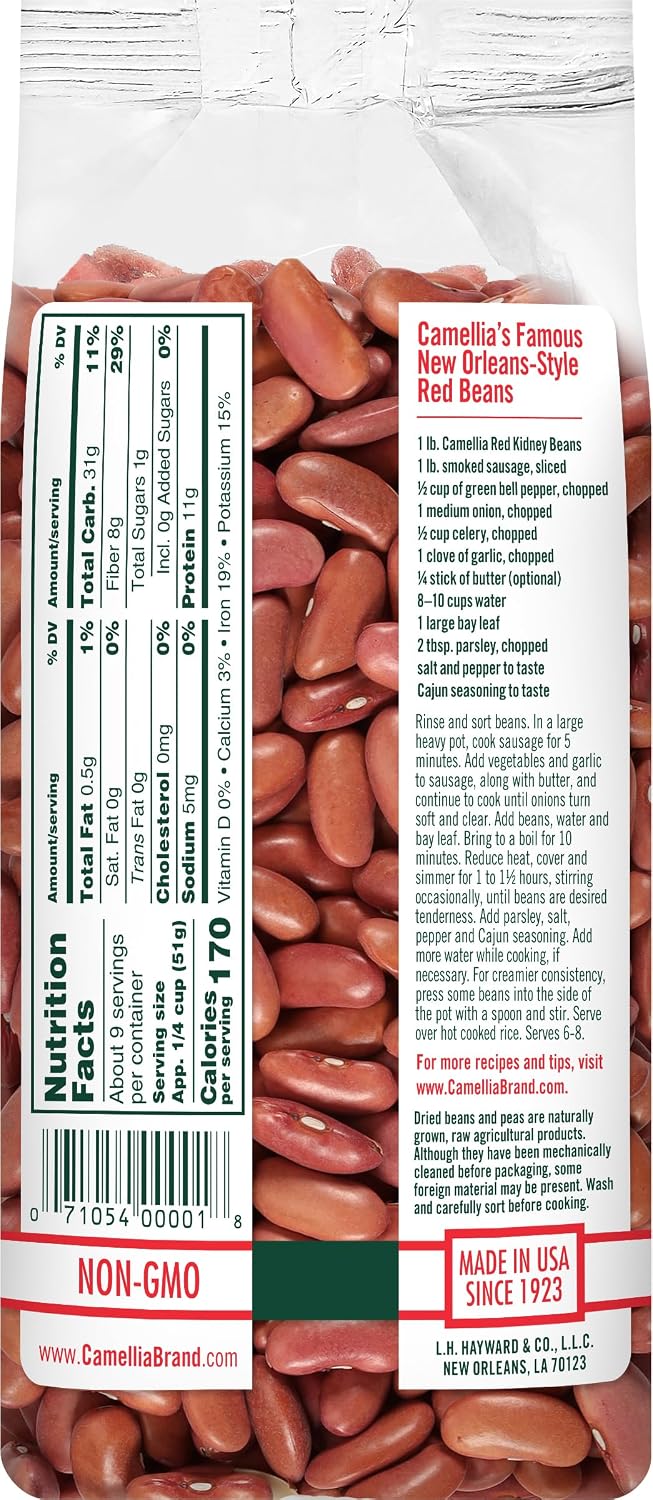
You’re standing at the bulk-bins section of a grocery store, staring at an anonymous bag of dried navy beans. The label tells you almost nothing — no origin, no harvest date, no grower. For most of American food history, that’s been the whole story with dried beans: a commodity product in a commodity bag, and nobody thought to ask more questions. Then you find a one-pound bag of Camellia Brand red kidneys, grown and processed through a family operation in Louisiana that has been doing this since 1923, and something shifts. Suddenly the bean has a biography.
If you’re already buying Rancho Gordo heirloom varieties for your stash, Camellia may feel like familiar territory — or it may be a gap in your pantry you didn’t know existed. This guide breaks down exactly what Camellia is, how it compares to the alternatives at its price point, and when it earns the shelf space over pricier specialty options. By the end, you’ll have a clear decision rule for where it fits in your sourcing rotation.
What Camellia Actually Is — And Why the Provenance Matters
Camellia Brand is a New Orleans–based, family-owned company founded in 1923. It specializes in dried legumes — the broad category of beans, peas, and lentils that need to be soaked and simmered before eating — with a particular emphasis on the varieties that anchor Louisiana Creole and Cajun cooking: red kidney beans (the backbone of red beans and rice), large limas, black-eyed peas, navy beans, crowder peas, and a rotating cast of field peas. The company sources primarily from domestic growers, with heavy emphasis on the Mississippi Delta and surrounding agricultural regions.
What distinguishes Camellia from a store-brand bag is a combination of three things that serious pantry builders should care about: turnover rate, regional variety selection, and processing consistency.
Turnover rate is the most underrated factor in dried-bean quality. A dried bean is not shelf-stable forever. As Serious Eats’ coverage of dried bean cooking notes, beans that have been sitting in a warehouse or on a shelf for more than a year will have lost significant moisture from the seed coat, leading to uneven cooking, split skins, and a mealy — rather than creamy — interior. Camellia, because it sells primarily into a regional market with genuine, consistent demand (New Orleans alone consumes remarkable quantities of red beans every Monday by tradition), cycles its inventory faster than a national generic brand that might sit in distribution longer.
Regional variety selection means Camellia stocks types that most national brands don’t bother with — varieties like speckled butter beans, purple hull peas, and Camellia’s own proprietary “small red beans” (distinct from kidney beans, and the correct choice for a true New Orleans–style red beans and rice). Saveur’s field guide to Southern beans notes that these variety distinctions aren’t cosmetic: different cultivars have genuinely different starch structures, skin thicknesses, and flavor profiles that affect the finished dish.
Processing consistency refers to the cleaning and sorting step before packaging. Camellia is well-regarded among serious cooks for low debris counts — less gravel, shriveled beans, and broken pieces per bag — which matters practically when you’re cooking a pound at a time.
The Honest Comparison: Camellia vs. Rancho Gordo vs. Generic
This is the decision point most practitioners actually face. Here’s the direct frame:
| Generic Store Brand | Camellia Brand | Rancho Gordo | |
|---|---|---|---|
| Price (per lb, approx.) | $1.50–$2.50 | $2.50–$4.00 | $5.95–$7.95 |
| Harvest date transparency | Rarely disclosed | Partially — production codes present | Full vintage disclosure |
| Variety range | Narrow, commodity types | Southern-focused, 20+ varieties | Heirloom-focused, 30+ rotating varieties |
| Best use case | Long-simmer soups where texture matters less | Creole/Cajun dishes, value-driven batch cooking | Showcased bean dishes, single-variety cooking |
| Availability | Everywhere | Regional + online | Online, specialty retail |
The cost-per-use math is worth pausing on. A one-pound bag of Camellia red kidneys, at roughly $3.50, yields six generous servings of red beans and rice when cooked with the standard aromatics. That’s under $0.60 per serving in beans alone — well below the entry point for almost any other premium pantry ingredient. Rancho Gordo’s equivalent produces similar yields at roughly double the cost per serving. Neither is expensive in absolute terms, but the ratio matters when you’re cooking for a dinner party of eight or running a supper club where food cost percentage is an actual number you track.
As Food & Wine’s pantry upgrade coverage notes, the most defensible splurge in a home kitchen is usually one that’s used constantly rather than occasionally. If you cook Southern food regularly — or run menus anchored in American regional cooking — Camellia is the higher-frequency, lower-anxiety choice. Rancho Gordo is the choice when the bean is the dish: when you’re doing a white bean bruschetta or a pot of Ayocote Morado where the heirloom variety’s mottled skin and nutty flavor is the point.
The practical rule: Camellia for supporting roles and Southern-specific applications; Rancho Gordo for the spotlight.
Where Camellia Fits in a Curated Pantry Strategy
The pantry sophistication curve tends to move in one direction: people discover that commodity ingredients vary more than they assumed, they find a premium alternative, and then — if they’re being honest about their cooking — they realize that “premium” and “always the right choice” aren’t synonymous.
Epicurious’s coverage of dried bean cooking points out that the most reliable dried beans are the ones you cook through quickly enough that they never go stale, regardless of price tier. That insight is the key to where Camellia earns its slot.
For a practitioner-level pantry, the argument for keeping Camellia on the shelf alongside a Rancho Gordo subscription looks like this:
1. Redundancy for high-frequency cooking. If you’re producing red beans and rice weekly, black-eyed peas for a New Year’s supper club menu, or large limas for succotash, you want a reliable, consistently available supply at a price that doesn’t require you to ration. Camellia fills that role.
2. Southern-specific variety access. Camellia’s small red beans, speckled butter beans, and field pea varieties simply aren’t available from most specialty purveyors. If your menu or cooking has any Southern accent, this is gap-filling, not redundant.
3. Gift and hospitality packaging. Camellia sells gift sets and multipacks that photograph well and carry genuine regional provenance — useful for supper-club hosts who want to send guests home with something meaningful but not at the price point of a specialty food hamper.
The One Tradeoff to Name Explicitly
Camellia’s transparency about harvest dates lags behind Rancho Gordo. Rancho Gordo’s famous “bean club” model is built around annual harvest cycles — beans sell out, restocking is tied to a specific crop year, and subscribers know they’re getting current-season product. Camellia uses production codes but doesn’t make harvest vintage front-and-center the way a wine or olive oil producer would. For buyers who treat provenance transparency as a non-negotiable, this is a real gap. It’s not disqualifying — the company’s domestic sourcing and regional sales velocity mean freshness is likely fine — but it’s an honest limitation.
By the Numbers
Camellia at a glance (May 2026 market conditions):
- Founded: 1923, family-owned, New Orleans, Louisiana
- Varieties available: 20+ including small red, large lima, crowder pea, speckled butter bean
- Retail price range: $2.50–$4.00/lb (1 lb bags); multipack bundles available
- Cost per serving (6 servings/lb): approximately $0.42–$0.67
How to Buy It and What to Buy First
Camellia ships nationally through its own website and is available through several specialty food retailers. If you’re new to the brand, the clearest entry points are:
Small Red Beans — Not kidney beans. These are smaller, with a thinner skin and creamier interior, and they are the correct bean for a New Orleans Monday red beans and rice. If you’ve been making this dish with kidneys because that’s what your grocery store stocked, this is a genuinely different — and more traditional — result.
Speckled Butter Beans — Larger, meatier than baby limas, with a texture that holds up to long braises and pairs well with smoked proteins. Caterers and private chefs sourcing for Southern-inflected menus find these difficult to source elsewhere.
Camellia Variety Packs — For a first purchase, the sampler format lets you assess cooking behavior and flavor across multiple types before committing to bulk. Reviewers on specialty food forums consistently recommend starting here before building out individual bag inventory.
The Decision Rule
If your pantry already includes Rancho Gordo and you’re wondering whether Camellia adds anything: yes, if you cook Southern American food with any regularity or are building menus that require regional variety accuracy. The two brands don’t overlap as much as they appear to from a distance — they serve genuinely different culinary territories.
If you’re choosing between Camellia and a generic store brand: Camellia wins cleanly on consistency, variety access, and the likelihood that your beans were packed recently rather than two years ago. The price difference is real but small enough that the cost-per-serving math lands well within what a serious cook will accept for a reliable result.
If you’re a supper-club operator or private chef building a Southern or Creole menu: Camellia is the sourcing baseline, not the luxury tier. It’s what a New Orleans grandmother would have in the cupboard — not because it’s the only option, but because it’s the right one.
The longer you cook seriously, the more you understand that the best pantry isn’t the most expensive one — it’s the most accurate one. Camellia Brand is accurate.