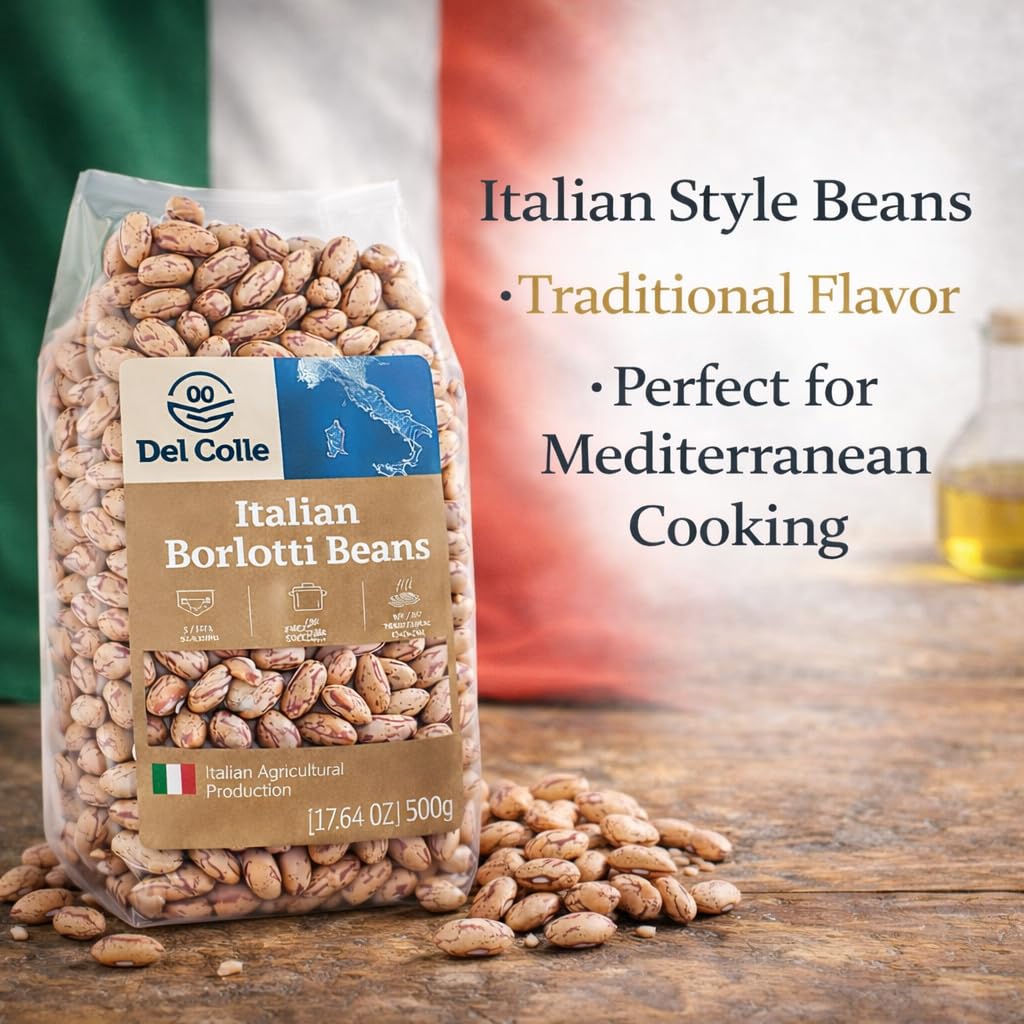
Picture this: you’ve spent real money on a good ham hock and a bottle of Brightland olive oil, you’ve built a broth with care, and then you pour in a bag of dried beans from the back of the pantry — beans with no harvest date, no origin, no story — and an hour later they’re still chalky in the center, their skins splitting unevenly, the flavor flat. The culprit isn’t your technique. It’s the beans.
Dried beans are seeds. Like all seeds, they age. A bean harvested last fall and stored well will absorb water evenly, cook in a predictable window, and deliver the creamy, mineral-rich texture that makes a simple dish feel extraordinary. A bean that sat in a warehouse for two years before hitting a grocery shelf can take twice as long to cook and still never fully soften. This guide is about three Italian varieties — borlotti, cannellini, and gigantes — that are worth importing or sourcing from specialty suppliers, and exactly how to evaluate whether a given source deserves your order.
| EDITOR'S PICK[Zursun Heirloom Dry Cannellini](https://www.amazon.com/dp/B07D94X44Z?tag=greenflower20-20)… | Mid-tier[Camellia Brand Dried Cannellini](https://www.amazon.com/dp/B08DW6GBLN?tag=greenflower20-20)… | Budget pick[SIMPLi Regenerative Organic Cer](https://www.amazon.com/dp/B0FPGQPNHR?tag=greenflower20-20)… | |
|---|---|---|---|
| Size | 24 oz | — | 12 oz |
| Bean type | Cannellini | Cannellini | Gigantes |
| Organic | — | — | USDA Organic |
| Non-GMO | — | ✓ | — |
| Heirloom | ✓ | — | — |
| Price | $16.99 | $14.00 | $10.99 |
| See on Amazon → | See on Amazon → | See on Amazon → |
Why These Three Varieties, and Why Italy Specifically
Borlotti (also called cranberry beans in the U.S.) are a speckled, rust-and-cream bean grown across northern Italy, particularly in the Veneto and Piedmont regions. Fresh borlotti are eaten in late summer; dried, they hold a meaty, chestnut-like density that’s well-suited to slow braises, ribollita (a Tuscan bread-and-vegetable soup), and pasta e fagioli. The speckle fades during cooking, but the flavor — nutty, earthy, with a subtle sweetness — intensifies.
Cannellini are the workhorse of the Italian pantry: a large, white kidney-shaped bean with a thin skin and buttery interior. They’re the default bean in Tuscany (Tuscans are still called mangiafagioli, “bean eaters,” by other Italians), the base of fagioli all’uccelletto (beans stewed with sage and tomato), and the right bean for any application where you want something that holds its shape but yields gently to a spoon. The difference between a good cannellini and a supermarket white bean is not subtle — it’s the difference between silk and cardboard.
Gigantes (from the Greek gigas, meaning giant) are oversized white beans, technically a variety of runner bean rather than a common bean, most associated with Greek cuisine but grown extensively in northern Italy under the name fagioli di Spagna. They’re the right call for dishes where the bean is the star: braised in tomato with herbs, roasted with olive oil until the exterior crisps and the interior stays molten, or simply dressed as a salad component where the size makes visual sense.
So why import? Because Italy — particularly the regions of Lamon, Sorana, and Altamura — produces beans under microclimatic conditions (cool nights, well-drained volcanic and alluvial soils) that create flavor profiles measurably different from commodity equivalents. Per Saveur’s feature on European heirloom legumes, IGP-protected beans from Lamon (borlotti) and Sorana (a smaller white bean related to cannellini) have a documented lower tannin content and thinner skin than mass-produced varieties, which translates directly to shorter cooking times and better mouthfeel.
The Sourcing Decision: What to Look For Before You Buy
This is where the intermediate sourcer earns their edge. The vocabulary sounds simple — “heirloom,” “single-origin,” “new crop” — but the operational implications of each term differ significantly.
Harvest date is the single most important variable. Food & Wine’s analysis of dried legume quality is unambiguous on this point: beans older than 18 months show measurably higher cooking times and inconsistent hydration. The best domestic analog here is Rancho Gordo, whose bean club communication model has established a useful benchmark for the category — they publish harvest year on product pages and rotate stock aggressively. For Italian imports, look for raccolta (harvest) year on the label or importer’s product page. A 2025 harvest available in May 2026 is ideal. A bag with no date is a gamble.
IGP and DOP designations matter, but not the way you think. IGP (Indicazione Geografica Protetta, Protected Geographical Indication) and DOP (Denominazione di Origine Protetta, Protected Designation of Origin) are EU quality certifications that restrict where a product can be grown and how it’s processed. For beans, the most relevant are Fagiolo di Lamon della Vallata Bellunese IGP (borlotti from the Dolomite foothills) and Fagiolo di Sorana IGP (a white bean from Tuscany). These designations guarantee origin and production method, but they don’t guarantee harvest recency or handling post-certification. A certified bean stored badly is still a bad bean. Use IGP as a quality floor, not a ceiling.
Importer transparency is a proxy for supply-chain health. The importer sitting between an Italian cooperative and your shelf is where most quality erosion happens. Look for importers who name the farm or cooperative (not just the region), publish harvest year, and specify storage conditions. In the current market (May 2026), a small cohort of specialty importers — including Gustiamo, which Food & Wine has cited as a benchmark for Italian pantry imports, and Zingerman’s Mail Order, which sources from named producers — provide this level of documentation. A premium-tier 500g bag of certified borlotti from a transparent importer runs $12–$18 USD; the same weight from an unattributed “Italian” source on a general marketplace runs $6–$8. The delta is real.
By the Numbers
| Product tier | Typical price per 500g | Harvest date disclosed? | Origin specificity |
|---|---|---|---|
| Supermarket Italian import | $4–$7 | Rarely | Country only |
| Specialty importer (no IGP) | $8–$12 | Sometimes | Region |
| IGP-certified, named source | $12–$18 | Usually | Farm or cooperative |
| Direct-from-producer (rare) | $18–$28 | Always | Field-level |
The cost-per-use math here is more forgiving than it looks. A 500g bag of dried beans yields roughly 1,000–1,200g cooked — enough for four to six substantial servings. At $15 for a certified bag, you’re at roughly $2.50–$3.75 per serving for the bean component of a dish. That’s a meaningful premium over commodity, but it’s also less than the olive oil you’ll finish the plate with.
Matching Variety to Application: A Decision Framework
Where practitioners burn time is in variety matching — using a cannellini when borlotti was called for, or scaling gigantes into a dish where their size works against the recipe’s texture logic. Here’s a clean if-then framework:
If the bean is a background element — supporting broth, minestrone, a grain salad — use cannellini. Their thin skin and neutral flavor amplify surrounding aromatics without competing. Epicurious’s coverage of Tuscan bean cookery consistently highlights cannellini’s ability to absorb braising liquid while holding structural integrity, which makes them the right call for any dish cooked long and low with acidic components (tomato, wine).
If the dish needs textural contrast — a ribollita where you want some beans to melt into the broth and others to stay whole, or a pasta e fagioli where the bean matters as a chewy element — borlotti is the answer. Their denser cotyledon (the interior of the bean) resists full breakdown at the same rate as their skin, which creates the two-texture effect that good ribollita depends on. Serious Eats’ deep-dive on Italian bean soups makes this structural argument explicitly, noting that borlotti’s higher starch content produces a creamier ambient broth even when individual beans stay intact.
If the bean is the centerpiece — the thing being dressed, braised, or roasted as the main event — gigantes. Their size creates presence on the plate. Braised gigantes in tomato and sage is a dish where you want each bean to be visible and significant. Roasted gigantes (high heat, olive oil, finishing salt) develop a crispy exterior that smaller beans can’t replicate.
For professional applications — supper clubs, private chef menus, catered events — the sourcing calculus shifts slightly. Gigantes from a named Greek or Italian producer photograph well and signal intentionality on a composed plate. Borlotti from Lamon hold a verbal story (“these are the beans from the Dolomite foothills, harvested in September”) that communicates provenance to a guest in the way that a generic white bean never could. Cannellini from Sorana are rare enough that naming them on a menu is a legitimate differentiator. Per the Rancho Gordo model of “variety storytelling,” buyers in the culinary professional segment increasingly see bean provenance as menu IP.
Storage and Handling: Where the Quality You Bought Can Be Lost
You’ve sourced well. Don’t undo it on the storage end. Dried beans are hygroscopic — they absorb moisture from the air — and light-sensitive. The enemy is humidity and temperature fluctuation, not time alone. A well-sourced 2025 harvest stored in an airtight, opaque container in a cool pantry will perform reliably through mid-2027. The same bean stored in a glass jar on a sunny counter degrades measurably faster.
For the practitioner sourcing in volume — six to twelve 500g bags at a time to amortize shipping from an Italian importer — vacuum-sealed storage bags rated for food use are the practical answer. Date your containers with the harvest year, not the purchase date. The harvest year is what matters.
One more operational note: do not salt your soaking water, and do add a strip of kombu (dried kelp, available at Japanese grocery suppliers) if you’re working with older stock or a variety you haven’t cooked before. Kombu contains enzymes that help break down some of the oligosaccharides responsible for both the gaseous reputation of beans and their tendency to stay firm when cooked in hard water. This is a well-documented technique in Italian farmhouse cooking and in Serious Eats’ bean-cooking methodology — not folk wisdom, but functional chemistry.
The Clear Verdict
If you’re building a pantry that can support serious Italian cooking, the decision tree looks like this:
- If you want one variety that handles 80% of applications, buy cannellini from a named importer with a 2024 or 2025 harvest date. Gustiamo and Zingerman’s are the two domestic sources that consistently meet the harvest-date and origin-specificity bar as of mid-2026.
- If you’re sourcing for a professional menu where the bean has a name on the plate, prioritize borlotti from Lamon IGP for braised and soup applications, and gigantes from a named Italian or Greek producer for composed and roasted preparations.
- If cost is the binding constraint, don’t split the difference with a mid-tier import. Either spend correctly on certified, dated stock, or buy domestic heirloom (Rancho Gordo’s borlotti equivalent performs well in comparative cook-offs documented by Serious Eats) and be honest about the tradeoff.
The bean you source is the foundation everything else builds on. The broth, the fat, the aromatics — they’re all working to elevate what’s in the pot. If what’s in the pot is a two-year-old anonymous white bean, no amount of good olive oil saves it. Source the bean first.