Imagine you’ve just added your third or fourth craft chocolate bar to your pantry — a proper single-origin bar (meaning cacao sourced from one specific region or farm, so the flavor reflects that place the way a single-vineyard wine does). You’ve moved past mass-market chocolate and you understand that “70% cacao” on a Valrhona or Dandelion bar means something real. Then you land on Raaka Chocolate and notice something unusual on the wrapper: “unroasted cacao.” Maybe you’ve also been buying Dick Taylor bars, which don’t make that claim at all. What’s actually the difference? Does it change what you taste? Does it change what you’re paying for? This article answers those questions directly — with the tradeoffs, the comparison, and a clear decision rule at the end.
What Roasting Actually Does to a Cacao Bean
Every chocolate bar starts with cacao pods harvested from Theobroma cacao trees. Inside those pods are seeds — the raw cacao beans — surrounded by a sweet white pulp. Before any of the flavor chemistry we associate with chocolate can develop, those beans go through fermentation (a 3–7 day microbial process at the farm or cooperative level that converts sugars and begins breaking down proteins) and then drying. At this point, the beans have flavor potential but they don’t yet taste like chocolate.
Roasting is where most of that familiar flavor locks in. Heat — typically 250°F to 320°F for 15 to 45 minutes depending on the maker — drives the Maillard reaction (the same browning process that creates crust on bread or sear on a steak) and triggers pyrazine development, producing the deep, roasted, slightly bitter top notes most people recognize as “chocolate flavor.” Roasting also lowers moisture, kills off residual microbes, and makes the bean’s outer shell — the husk — easier to crack away so the inner nib (the broken cacao fragment that gets ground into chocolate) can be processed cleanly.
What roasting also does, by definition, is volatilize some of the more delicate aromatic compounds — the fruity esters, floral top notes, and bright acidic profiles that a great fermentation can produce. For high-quality beans from a carefully managed origin, some makers argue that’s a loss worth reconsidering. Saveur’s bean-to-bar chocolate explainer coverage addresses this tradeoff directly, noting that fermentation quality and roast decisions together determine the flavor ceiling of any finished bar.
Raaka’s Unroasted Approach: The Case for Virgin Cacao
Raaka, a Brooklyn-based maker founded in 2010, built its entire identity on skipping the roast. They call their process “virgin cacao” — a framing that signals the beans have never been exposed to high roasting heat. Instead, Raaka uses a low-temperature conching and melangeur process, where grinding and aeration over 50–72 hours at controlled temperatures below 150°F develops texture and integrates flavor without triggering the Maillard browning cycle.
The result, as Serious Eats’ craft chocolate and bean-to-bar coverage describes in its treatment of unroasted makers, is chocolate that leads with what the fermentation built rather than what roasting adds. Depending on the origin, this can mean:
- Pronounced fruit-forward acidity — tart cherry, tamarind, citrus peel
- Floral or herbal mid-notes that a full roast would mute
- A lighter, less “roasty” bitterness in the finish
- More variability bar to bar, because you’re tasting terroir (the flavor influence of a specific place’s soil, climate, and farming practice) rather than a roast profile that can standardize across origins
Raaka’s transparency stack is notably deep. Their wrappers include the origin, the fermentation source, and a flavor-note descriptor. Bar prices run roughly $10–$14 for a 1.8 oz bar — a range that Food & Wine’s craft chocolate movement coverage positions as mid-to-premium in the current bean-to-bar market.
The honest tradeoff: Unroasted cacao is more sensitive. The flavor is less predictable for buyers who want consistency across purchases, and it reads as unusual to palates calibrated on conventional chocolate. Bon Appétit’s dark chocolate tasting coverage notes that unroasted bars often register as “cleaner” or “brighter” but occasionally “less round” than a well-roasted origin bar — a distinction that matters depending on what you’re buying for.
Raaka: Best For Exploration and Education
For pantry builders who want to understand what fermentation alone produces — before roasting layers in — Raaka is the most direct path. The variability that some buyers find inconsistent is, from a learning standpoint, the point: each bar is a snapshot of its origin and fermentation rather than a standardized house profile.
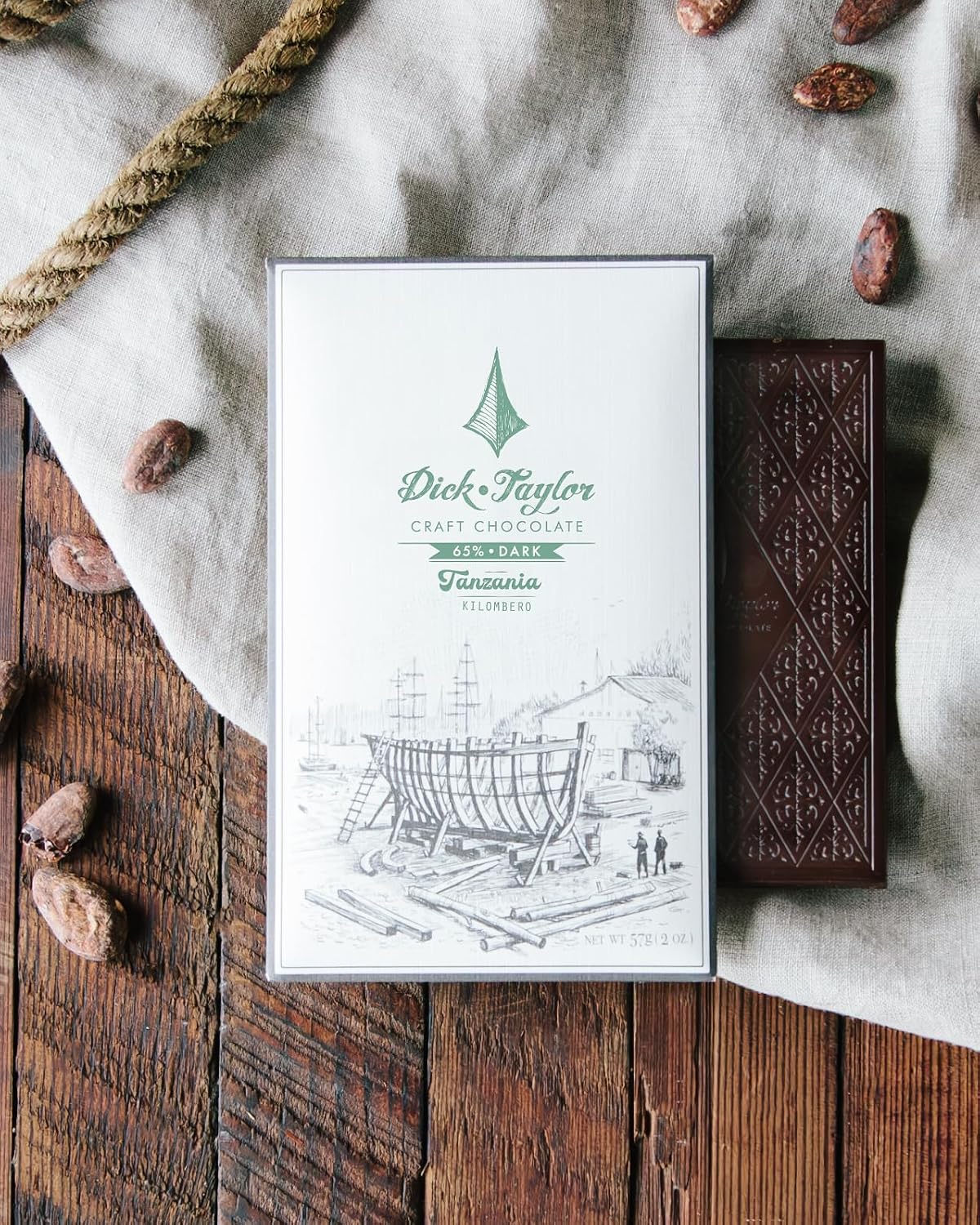
Dick
$33.50
In stock on Amazon
Check price on AmazonDick Taylor’s Roasted Approach: Precision as the Point
Dick Taylor Craft Chocolate, founded in 2010 in Eureka, California, operates from a different philosophy: roasting done precisely is itself an act of respect for the bean. They are a canonical example of American bean-to-bar craft — sourcing directly from farms and cooperatives, publishing their origin sourcing, and calibrating their roast profile to each specific lot rather than applying a house standard.
What Dick Taylor controls tightly, per their published sourcing documentation and coverage in Eater’s American craft chocolate maker features:
- Origin-specific roast profiling: a Belize Toledo bean gets a different time/temperature curve than a Madagascar Sambirano. This is not trivial — it’s the same logic a skilled coffee roaster applies to different varietals, dialing heat to protect delicate aromatics while still developing the Maillard complexity the bean is capable of.
- Stone-grinding conching: their two-roll stone melangers run for 60–70 hours, developing texture without over-processing.
- Minimal ingredient lists: most Dick Taylor bars are two-ingredient — cacao and organic cane sugar, sometimes with added cacao butter for certain formulations.
The flavor result is what Saveur’s bean-to-bar chocolate explainer describes as a “classically articulated” craft chocolate profile: roasted depth in the base, fruit or floral notes that survive the precision roast at the top, and a long, clean finish. For buyers who associate “good chocolate” with flavors they’ve built intuition around — through Valrhona, Dandelion, or comparable makers — Dick Taylor reads as excellent and immediately legible.
Bar prices run $11–$18 for a 2 oz bar, depending on origin. That per-ounce price is comparable to Raaka at the lower end and slightly premium at the top.
Dick Taylor: Best For Pairing and Accessible Complexity
Dick Taylor’s precision roast makes the bar legible to a wide range of palates. Serious Eats’ bean-to-bar coverage consistently positions roasted single-origin bars as the better entry point for buyers new to craft chocolate — the familiar flavor vocabulary lowers the barrier to appreciation without sacrificing origin character.
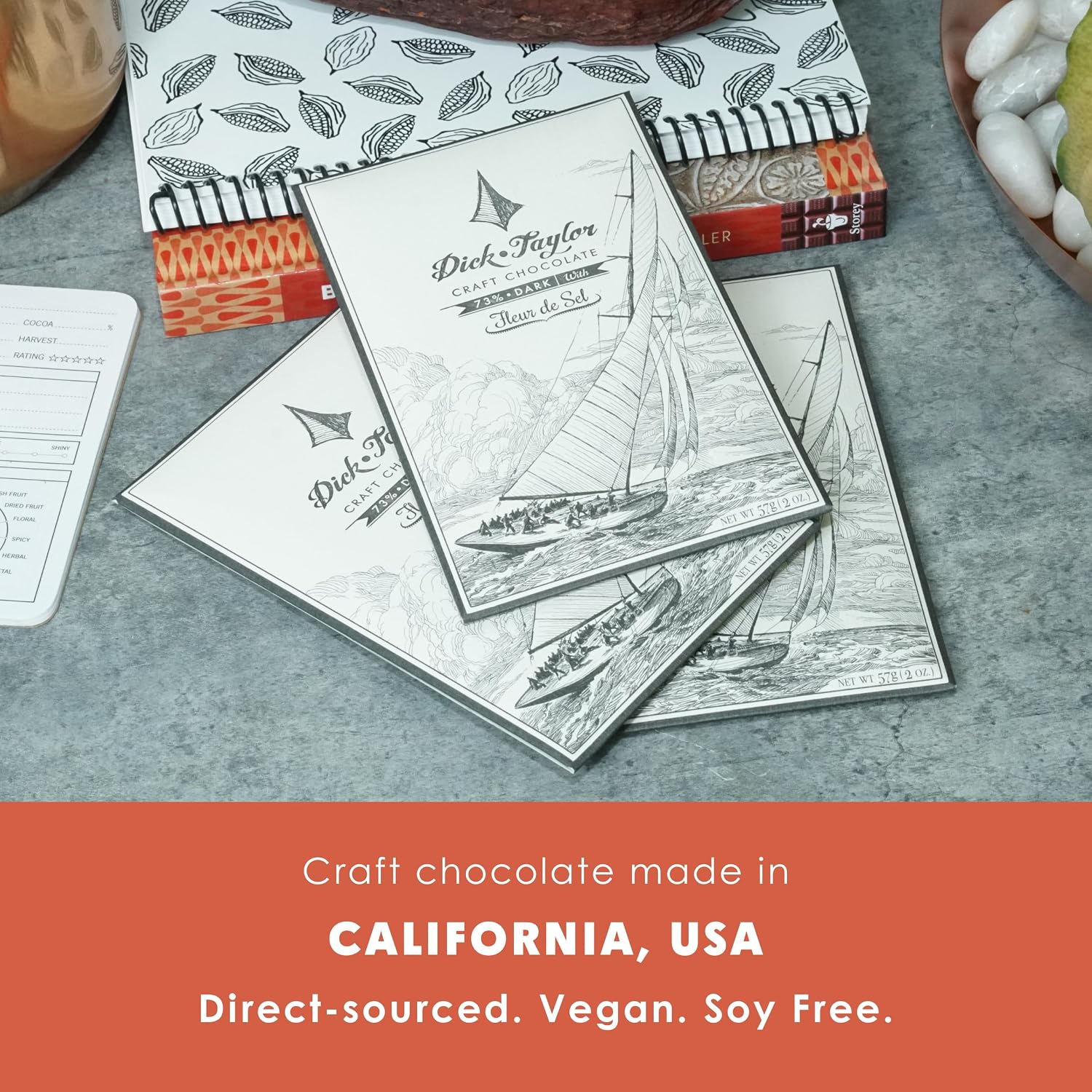
Dick
$47.99
In stock on Amazon
Check price on AmazonSide-by-Side: How the Two Makers Compare
Process and Flavor Signature
| Raaka | Dick Taylor | |
|---|---|---|
| Roast temp | None (under ~150°F) | Origin-specific, ~260–310°F |
| Conche time | 50–72 hrs | 60–70 hrs |
| Bar size | 1.8 oz | 2 oz |
| Price range | $10–$14/bar | $11–$18/bar |
| Flavor signature | Fruit-forward, bright acid, terroir-led | Roast depth + terroir, classically legible |
| Batch consistency | Higher variability | Higher consistency |
Pairing and Use-Case Fit
For cheese boards, charcuterie pairings, or composed dessert courses: Dick Taylor’s roasted profiles are easier to work with. The flavor vocabulary is familiar enough that guests calibrate quickly, and the roasted bitterness plays well against aged fat in a washed-rind cheese or a cured prosciutto. Bon Appétit’s dark chocolate tasting coverage identifies roasted single-origin bars as the more versatile pairing partner for savory-adjacent applications.
For tasting-driven pantries or supper clubs where the chocolate is the subject: Raaka is the more interesting pedagogical tool. The brightness and variability force the conversation about fermentation and origin that a roasted bar can sometimes mask. Eater’s American craft chocolate maker features note that unroasted bars are increasingly appearing on high-end tasting menus precisely because they demonstrate what the cacao itself tastes like before roast chemistry layers in.
Entry Point for New Buyers
For buyers newer to bean-to-bar chocolate who are still calibrating their palate against a Valrhona or Dandelion baseline: start with Dick Taylor. The roasted profile gives you a familiar foothold. Once you can articulate what you’re tasting — origin brightness versus roast depth, acidity versus bitterness — move to a Raaka bar from the same origin region and compare directly. That side-by-side is one of the most efficient ways to develop chocolate intuition quickly, a method Food & Wine’s craft chocolate movement coverage recommends for readers building a tasting vocabulary.
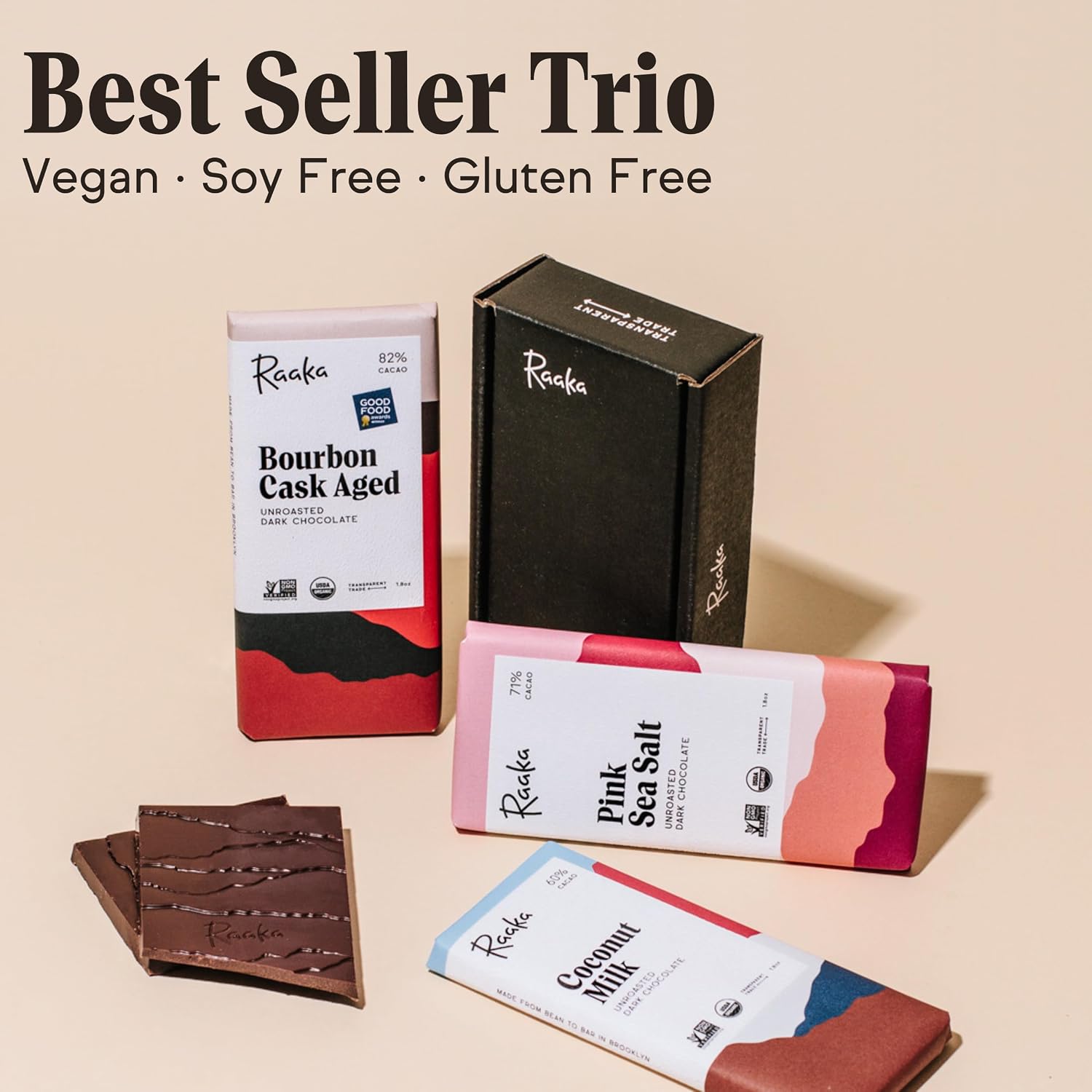
Raaka
$26.95
In stock on Amazon
Check price on AmazonThe Decision Rule
Here it is, plainly:
If your use case is pairing, entertaining, or building a pantry that communicates “serious but accessible” to guests — buy Dick Taylor. The precision roast makes the bar legible to a wide range of palates, the origin sourcing gives you provenance to discuss, and the flavor range across their catalog is broad enough to sustain a genuine collection.
If your use case is education, exploration, or finding a chocolate that tastes structurally different from anything in the conventional market — buy Raaka. The unroasted approach is not a gimmick; it is a coherent process philosophy that produces genuinely distinct flavor. The bars require a slightly recalibrated palate but reward it.
If you’re choosing one maker to start with and want the higher floor: Dick Taylor. The roast provides a safety net for the complexity — even their entry-level bars are well-executed. Raaka’s ceiling may be higher for the right origins and the right buyer, but the floor has more variability by design.
Both are worth a place on the shelf. They are not substitutes for each other — they’re answers to different questions about what chocolate can do. A pantry that holds one bar from each is a more useful tool than a pantry stocked deep with either alone.