Picture this: you’ve just finished a bowl of creamy white beans — the kind you simmered low and slow with a bay leaf and a rind of Parmigiano — and you reach for the olive oil to finish it. You drizzle, you taste, and something is wrong. The oil is flat. Grassy where it should be fruity, or harsh where it should be peppery and bright. The beans deserved better, and so did you.
Extra-virgin olive oil (EVOO for short — meaning oil made entirely from cold-pressed, unrefined olives with no chemical extraction and low enough acidity to meet international standards) is one of those pantry items where the gap between a good bottle and a great one shows up most clearly at the end of cooking, not the beginning. The finishing drizzle — that last pour over a finished dish right before it hits the table — is where aromatics, fruitiness, and bitterness do their most visible work. Heat kills those qualities. Which means the oil you cook with and the oil you finish with can, and often should, be different bottles. This guide will help you decide which single-origin EVOOs belong in each role, what to look for on the label, and how to spend your money deliberately.
| EDITOR'S PICK[Frankies 457 Organic Extra Virg…](https://www.amazon.com/dp/B0058VCU5O?tag=greenflower20-20) | Mid-tier[Partanna Robust Extra Virgin Ol…](https://www.amazon.com/dp/B0044B6ZBO?tag=greenflower20-20) | Budget pick[Graza Drizzle Extra Virgin Oliv…](https://www.amazon.com/dp/B09WTZRV6Z?tag=greenflower20-20) | |
|---|---|---|---|
| Origin | Sicily | Sicily | Spain |
| Olive variety | Castelvetrano | Castelvetrano | — |
| Harvest type | Early harvest | — | Early harvest |
| Polyphenol | High | — | High |
| Volume | — | 16.9oz | 500ml |
| Organic | ✓ | — | — |
| Price | $36.99 | $19.99 | $17.09 |
| See on Amazon → | See on Amazon → | See on Amazon → |
Why “Single-Origin” Changes the Decision
Single-origin, in the olive oil context, means the oil comes from one specific region, estate, or grove — rather than a blend of oils from multiple countries, which is how most grocery-store bottles are made. Producers like Brightland (California), Castelines (Provence), and Nicolas Alziari (Nice) publish harvest dates, olive varieties, and grove locations on their bottles. That transparency matters because it gives you a way to predict flavor before you open the cap.
Olive variety is the dominant flavor driver. Serious Eats’ overview of extra-virgin olive oil (“What Is Extra-Virgin Olive Oil and How Is It Different?”) explains that variety determines whether you’re dealing with a grassy, herbaceous oil (Arbequina, Picual) or a rounder, more buttery one (Taggiasca, Koroneiki from certain growing zones). Saveur’s olive oil variety guide maps this clearly: Sicilian Nocellara del Belice tends to be golden, lush, and low-pepper — excellent on delicate fish. Tuscan Frantoio is assertive, bitter-finishing, built to hold its own against bitter greens and aged cheese. Arbequina from California reads fruity and light — versatile but rarely the most interesting finisher on its own.
The finishing drizzle rewards assertiveness and complexity. The cooking role rewards stability and neutrality. That’s the core decision frame, and everything else in this guide builds on it.
The Finishing Drizzle: What You’re Actually Buying
When you drizzle oil over a finished plate — a piece of burrata, a bowl of lentil soup, grilled asparagus, bruschetta — you’re adding it raw. Every volatile aromatic compound is fully present, and the heat of the food gently wakes those compounds up without destroying them. This is the highest-expression moment for a premium EVOO.
What to look for in a finishing oil:
-
Harvest date within 18 months. Olive oil doesn’t age like wine. Food & Wine’s guide “How to Store Olive Oil the Right Way” and Cook’s Illustrated’s panel methodology in “Tasting Extra-Virgin Olive Oils” both identify polyphenol degradation — polyphenols being the bitter, peppery compounds that give fresh olive oil its complexity and antioxidant value — as significant within 18–24 months of harvest. Producers who print a harvest date, not just a “best by” date, are the ones worth buying. As of May 2026, you’re looking for 2024–2025 harvest bottles.
-
A clearly named olive variety. “100% Italian olives” tells you almost nothing. “Nocellara del Belice, estate-pressed” tells you what you’re getting into.
-
Higher polyphenol content when stated. Some producers now publish polyphenol counts in mg/kg on their spec sheets. Finishing oils for food-forward use often run 250–400 mg/kg; the International Olive Council’s quality framework treats robust oils as those exceeding roughly 200 mg/kg.
-
Tin or dark glass packaging. Light degrades olive oil faster than almost anything. Producers serious about quality — Brightland, Graza, Kosterina, California Olive Ranch’s single-origin line — use opaque or dark packaging specifically for this reason.
By the numbers:
- Finishing drizzle: 1–2 tsp per portion, roughly $0.60–$1.40 per use on a $38 bottle
- Cooking use: 1–3 tbsp per portion, roughly $1.80–$4.20 per use on the same bottle
- Break-even argument: a $22 cooking EVOO and a $38 finishing EVOO totals roughly $60, versus $76 if you used the premium bottle for everything
The cost-per-use math genuinely favors splitting your olive oil budget across two bottles. You preserve your finishing oil by not burning through it on sautés, and you’re not wasting money heating an oil whose best qualities vanish above 325°F anyway.
Three Finishing-Oil Tiers: Matching Bottle to Budget
This is where the commercial decision gets concrete. The right single-origin finishing EVOO depends on how much complexity you want, what dishes you’re finishing, and what you’re willing to spend per bottle. The three tiers below cover the practical range.
Budget-Friendly Finisher: Arbequina or Arbosana, California-Grown
California Olive Ranch’s single-origin Arbequina is reviewed favorably in Cook’s Illustrated’s “Tasting Extra-Virgin Olive Oils” panel as a reliable, accessible option with consistent harvest-date labeling. Brightland’s Arise — a California blend of Arbequina and Arbosana — reads similarly: light-fruited, low-pepper, and well-suited to delicate applications like soft-cooked eggs, fresh mozzarella, or raw summer vegetables. These bottles typically run $22–$28 and are widely available through specialty grocers and direct from producers.
Best for: Delicate dishes, everyday finishing use, cooks building the two-bottle habit for the first time. What you give up: The structural assertiveness that makes a Frantoio or Koroneiki interesting over bold food.
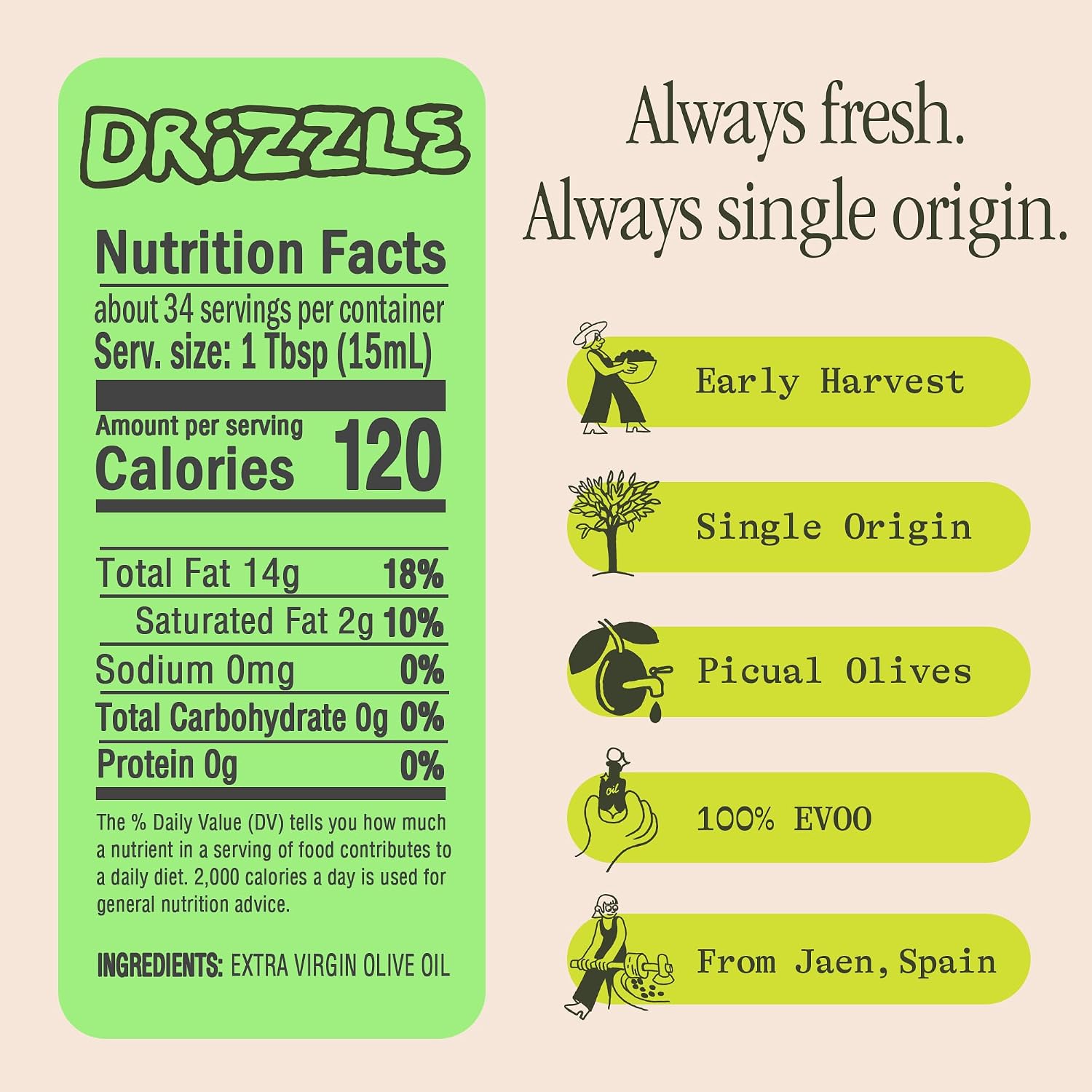
Graza
$17.09
In stock on Amazon
Check price on AmazonMid-Tier Finisher: Nocellara del Belice or Taggiasca, Mediterranean Estate
Sicilian Nocellara del Belice and Ligurian Taggiasca represent the middle tier for good reason: they combine genuine complexity with enough approachability to work across a wide range of dishes. Saveur’s olive oil variety guide singles out Nocellara for its golden color, lush mouthfeel, and restrained pepper — a profile that complements white fish, raw shellfish, burrata, and mild cheeses without overwhelming them. Nicolas Alziari, a Nice-based producer with an estate focus on Taggiasca olives, is cited in Saveur’s sourcing coverage as a benchmark for that variety’s style.
Bottles in this tier typically run $28–$38 and are most reliably found through specialty food shops or direct-to-consumer online producers. Bon Appétit’s “The Best Olive Oils to Buy Right Now” consistently places single-estate Mediterranean producers in this price range as their primary finishing recommendations.
Best for: Cheese boards, seafood, vegetable-forward plates, dishes where you want complexity without aggression. What you give up: The high-polyphenol punch of an early-harvest Koroneiki or a Tuscan Frantoio.
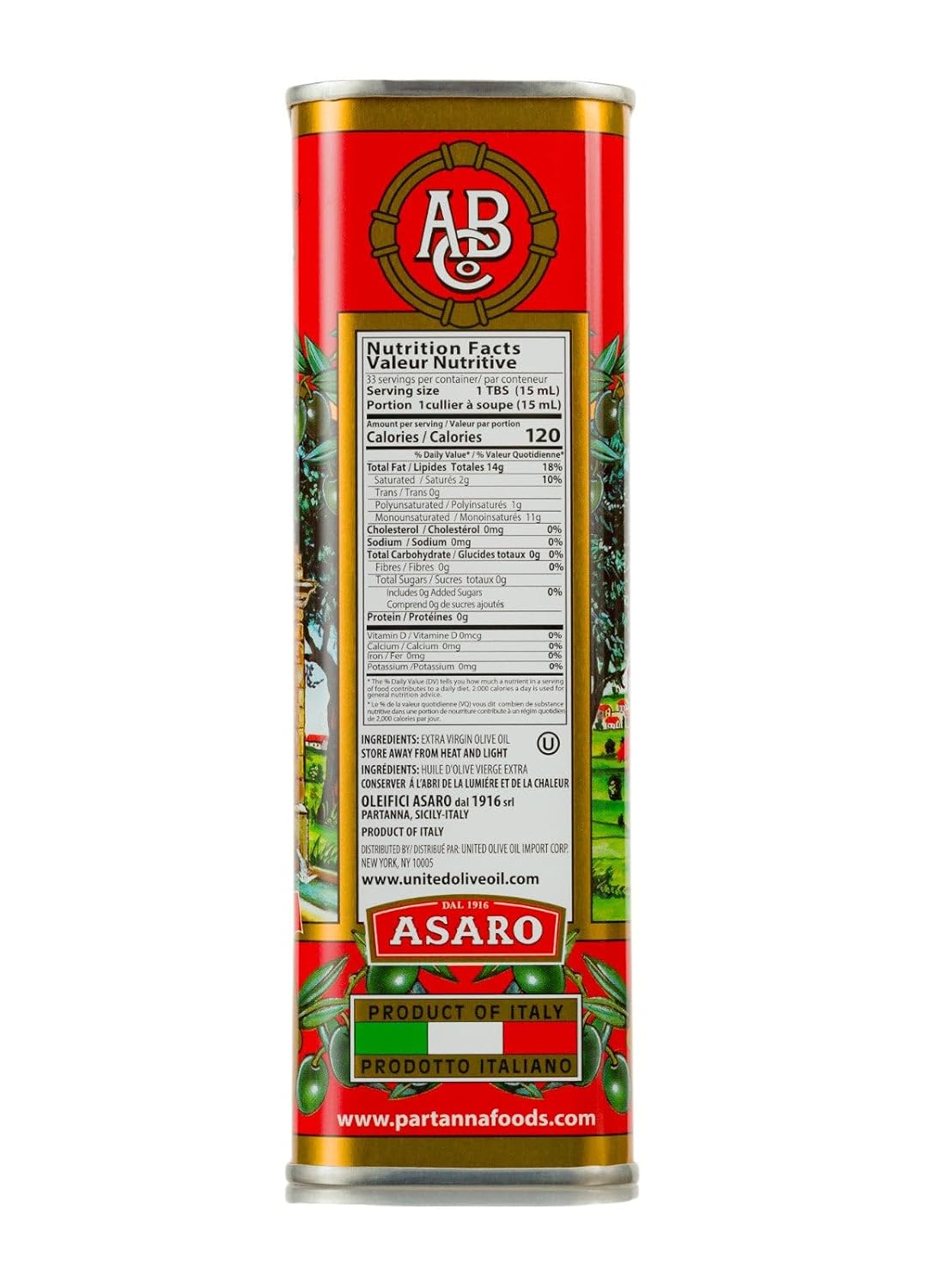
Partanna
$19.99
In stock on Amazon
Check price on AmazonPremium Finisher: Early-Harvest Koroneiki or Tuscan Frantoio, High-Polyphenol
This is the assertive end of the spectrum — oils pressed before full ripeness from high-phenol varieties, producing pronounced bitterness, a throat-catching pepper finish, and the structural intensity needed to hold its own against bold food. Kosterina sources exclusively from Koroneiki olives and publishes polyphenol counts on their spec documentation; their early-harvest expression tests consistently above 300 mg/kg by their published figures. Tuscan Frantoio producers like Laudemio and Il Conventino operate in the same register: high bitterness, long pepper finish, assertive enough to season ribollita, lamb, or aged pecorino the way a good flaky salt does.
These bottles run $38–$52 and are worth every cent when the dish matches. Serious Eats’ “What Is Extra-Virgin Olive Oil and How Is It Different?” notes that high-polyphenol oils are particularly well-suited to applications where the oil is tasted directly and in quantity — exactly the finishing drizzle scenario.
Best for: Bitter greens, braised legumes, grilled lamb, aged hard cheeses, any dish where you want the oil to read as seasoning. What you give up: Approachability on delicate food — a 380 mg/kg Koroneiki over fresh mozzarella is too aggressive for most palates.
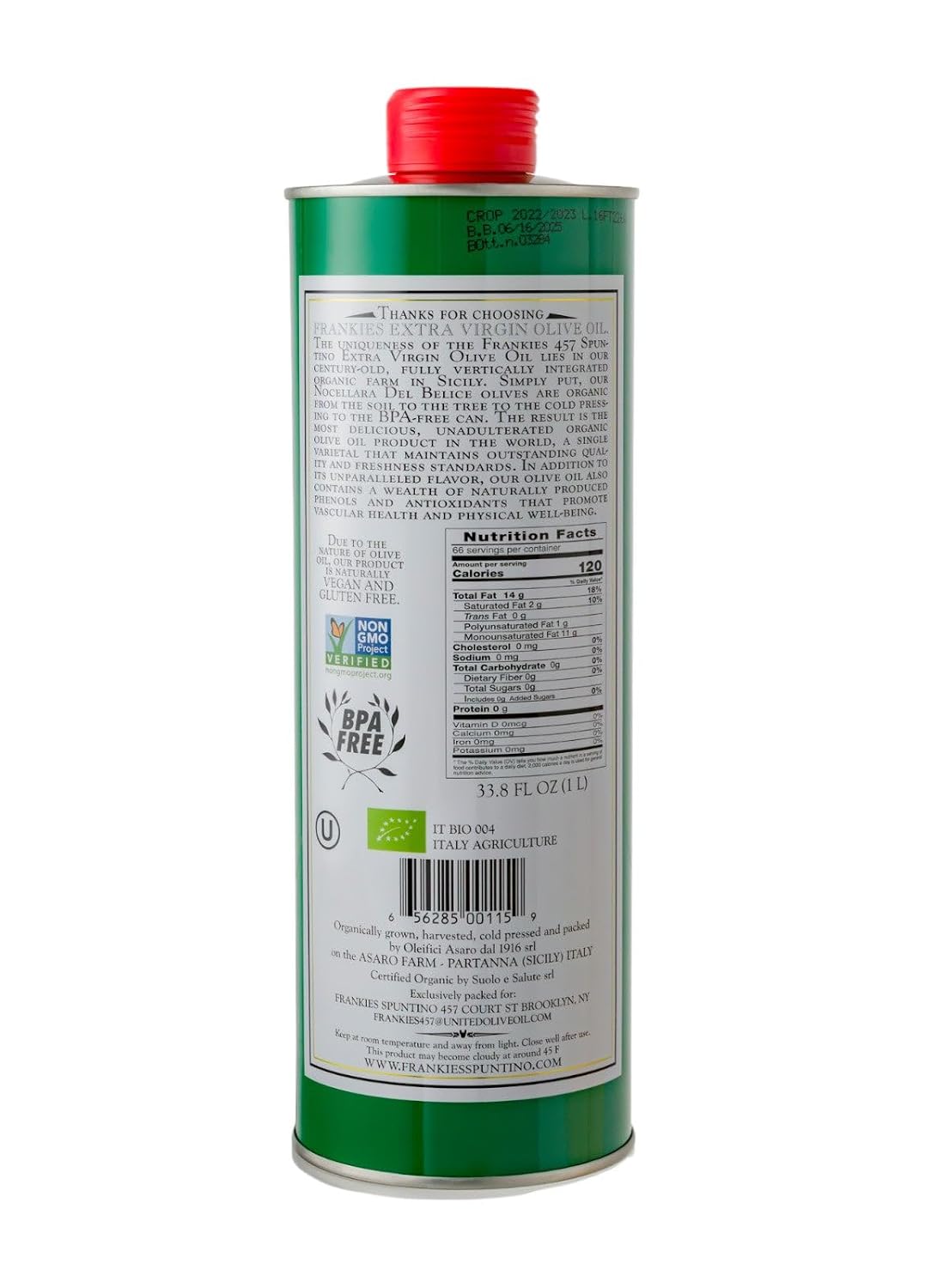
Frankies 1L
$36.99
In stock on Amazon
Check price on AmazonThe Cooking Role: Where Good Beats Precious
Here’s the honest part: cooking with a $45 single-origin finishing oil is not just wasteful, it’s counterproductive. The fruity aromatics that justify the price vaporize between 300–375°F, which covers most sautéing and roasting work. What survives is fat and a mild olive flavor — something a well-sourced $18–$24 EVOO handles just as well.
For cooking, you want:
- A filtered EVOO (unfiltered oils have more sediment and a lower effective smoke point)
- A neutral-to-mild flavor profile — Arbequina and Arbosana varieties tend to be forgiving at heat
- A producer who prioritizes consistency and volume over small-lot precious-ness — California Olive Ranch’s Arbequina, Kirkland’s Organic EVOO (sourced from multiple Mediterranean estates), or Jovial Foods’ Italian EVOO are reviewed well by Cook’s Illustrated for reliable quality at accessible price points
- A reasonable harvest date — within 24 months is fine for cooking use; you don’t need 14-month freshness when you’re sweating onions
Bon Appétit’s “The Best Olive Oils to Buy Right Now” draws this distinction clearly: the oils flagged as everyday cooking picks prioritize balance and heat tolerance. The ones recommended for finishing tend to be single-estate, single-variety, recently harvested, and priced accordingly.
Label Reading: The Shortcuts That Actually Work
You’re standing in a specialty shop or scrolling through a producer’s site. Here’s how to evaluate a bottle in under two minutes:
-
Find the harvest date, not just the best-by date. Best-by dates are typically set 24 months from harvest. Do the subtraction. If a bottle in May 2026 has a best-by of August 2026, it was pressed around August 2024 — fine for cooking, but you’ve already lost about 22 months of peak freshness.
-
Read the variety name, not just the country. “Imported from Italy” covers everything from fresh-pressed Frantoio to commodity blends. A named variety means the producer knows — and wants you to know — what they pressed.
-
Check the packaging. Tin or dark glass is a producer signal. Clear glass is a compromise (often for retail shelf visibility) that shortens the oil’s useful life once it’s on your counter and exposed to light.
-
Look for a mill date or “early harvest” notation. Early-harvest oils are pressed before full olive ripeness, producing higher polyphenol content and more pronounced bitterness. Late-harvest oils are richer, fruitier, and milder. Neither is universally better — it depends on the application.
-
Ignore vague certification claims in isolation. “Cold-pressed” is nearly universal among producers targeting this market. “DOP” or “PDO” (protected designation of origin — a European certification tied to geography and production method) is meaningful for provenance but doesn’t guarantee freshness. Use it as one signal among several, not the deciding factor.
The Decision Rule
If you walk away with one framework, make it this:
If you’re cooking at medium-to-high heat or building a recipe base, use a clean, filtered, reasonably fresh EVOO in the $18–$24 range — and don’t feel guilty about it. Heat is the great equalizer; the polyphenols that justify premium pricing don’t survive the pan.
If you’re finishing a plate — anything raw, anything warm but not cooked, anything where the oil will be tasted directly — that’s where the $28–$52 single-origin bottle earns its place. Pick the tier that matches the dish’s character: delicate food calls for Taggiasca or Arbequina at the budget or mid tier; assertive food calls for Frantoio or early-harvest Koroneiki at the premium end. Verify the harvest date is within 18 months, and use it generously. A finishing oil rationed out of guilt is a finishing oil that will go stale before it does its job.
One bottle for cooking. One for finishing. The math works. The food gets better. That’s the move.