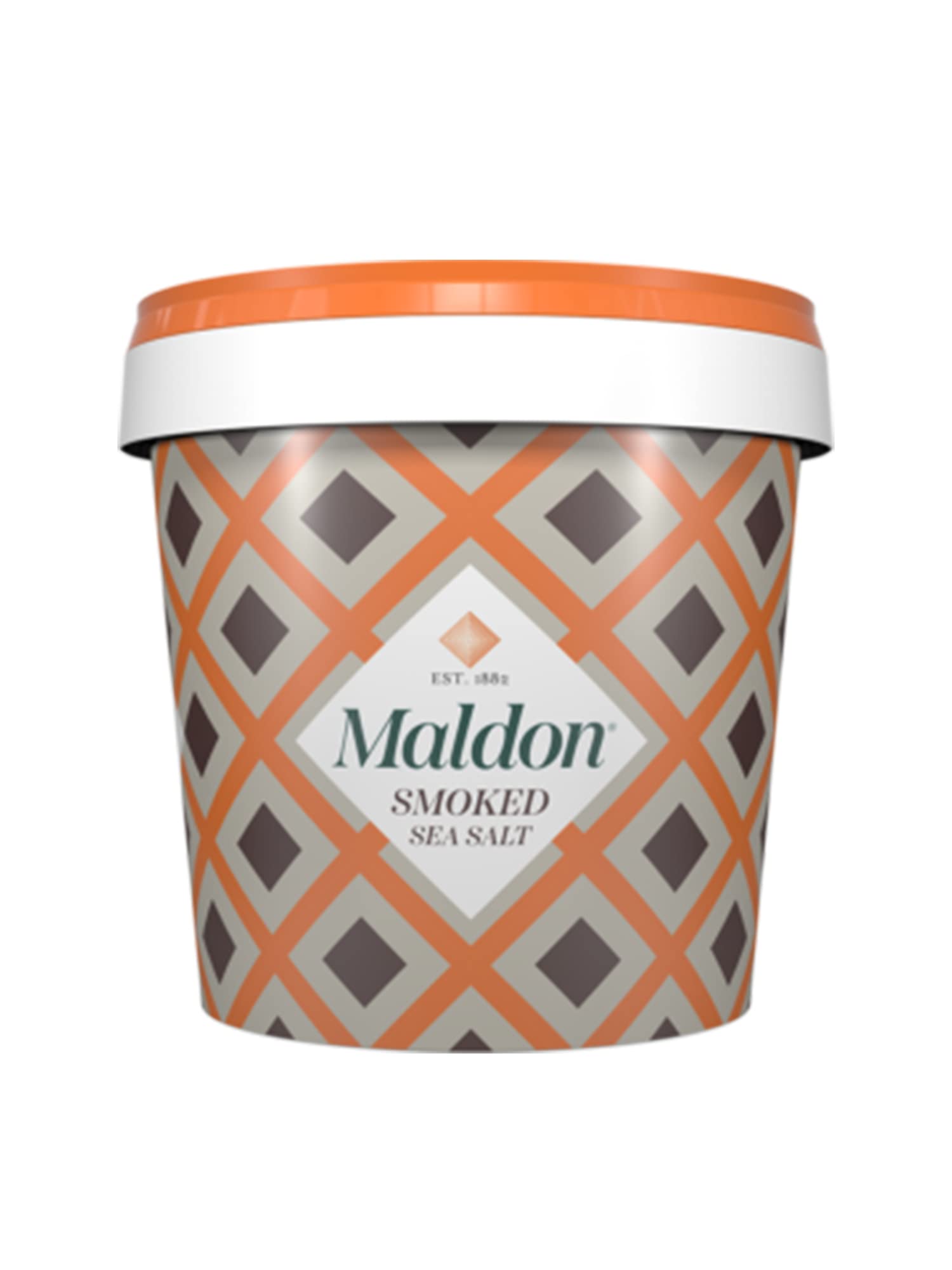
You’re standing over a just-rested ribeye, finishing salt in hand, and you reach for the smoked one — because it feels right, because the bottle is beautiful, because smoke and beef are a logical pairing. But here’s the real question underneath that reflex: is the smoke in that salt actually doing work, or is it decorative noise? Finishing salt, as a concept, is simple — it’s any salt added at or just before service, rather than during cooking, to deliver texture and a burst of seasoning on the tongue. A smoked finishing salt takes that idea one step further by cold-smoking the crystals (exposing them to wood smoke without heat, so the salt doesn’t dissolve) or occasionally by hot-smoking them over live coals. The wood choice matters enormously. Oak, in particular, produces a smoke profile that reviewers and culinary writers consistently describe as layered rather than aggressive — more bourbon barrel than campfire, which is why it has emerged as the benchmark wood for serious pantry salts. This guide is for the cook who already owns a good finishing salt and is trying to figure out whether an oak-smoked version deserves a permanent spot on the counter — and if so, which one, at what price, and on what dishes.
| EDITOR'S PICK[Maldon Salt](https://www.amazon.com/dp/B073XJRYVG?tag=greenflower20-20) | Mid-tier[Falksalt - Smoke Sea Salt Flakes](https://www.amazon.com/dp/B07FN2JMPN?tag=greenflower20-20) | Budget pick[Maldon - Smoked Sea Salt Flakes](https://www.amazon.com/dp/B073XJRYVG?tag=greenflower20-20) | |
|---|---|---|---|
| Weight | 1.1 lb | 4.4 oz | 4.4 oz |
| Smoke source | Oak | — | Oak |
| Kosher | ✓ | ✓ | — |
| Bulk tub | ✓ | — | — |
| Crystal type | Pyramid | — | Pyramid |
| Price | $28.34 | $12.49 | $6.95 |
| See on Amazon → | See on Amazon → | See on Amazon → |
What “Cold-Smoked” Actually Means — and Why It Changes Everything
The production method is the single biggest quality variable in smoked salt, and it’s worth understanding before you spend $14 to $28 on a jar.
Cold-smoking means the salt crystals are placed in a smoking chamber where wood smoke circulates at temperatures low enough that the crystals remain intact and dry — typically below 90°F (32°C). The smoke compounds (phenols, carbonyls, and acids, if you want the chemistry) adsorb onto the surface of each crystal. Because the salt isn’t melting or clumping, you get discrete, intact flakes or crystals that crunch on the tongue and release both salinity and smoke simultaneously. Food & Wine’s feature on smoked salt production notes that cold-smoking is a slower process — good producers run multiple smoke cycles over 24 to 72 hours — and that the wood species and moisture content of the wood are as consequential as the salt’s source crystal.
Hot-smoking, by contrast, uses higher ambient temperatures and can partially dissolve crystal structure. The result is often a denser, moister product that clumps in storage and delivers smoke in a blunter, less nuanced way. Neither method is wrong, but for use as a finishing salt — where texture is half the point — cold-smoked is almost always the better choice.
Oak specifically matters because it sits in the middle of the smoke intensity spectrum. Saveur’s field guide to finishing salts places oak between the milder fruitwoods (cherry, apple) and the more aggressive hardwoods (hickory, mesquite). That middle position means oak-smoked salt can function as a seasoning agent rather than a dominating flavor — it reinforces umami and amplifies fat without announcing itself as loudly as mesquite would on, say, a composed salad or a piece of grilled fish.
The Pairing Matrix: Where Oak Smoke Earns Its Place (and Where to Skip It)
This is the decision framework that matters most in day-to-day use. Smoked salt is not a universal finishing salt — it’s a conditional one. Understanding the conditions is the difference between a pantry staple and a one-trick jar.
Where oak-smoked salt outperforms plain flake salt:
- Red meat and lamb, finished after the sear. The Maillard reaction (the browning that happens when meat is seared at high heat) already produces smoke-adjacent flavor compounds. Oak-smoked salt reinforces those compounds rather than introducing something foreign. Epicurious’s finishing salt review specifically calls out smoked salts as “transformative” on beef fat and lamb fat.
- Egg dishes. Soft-scrambled eggs, fried eggs with runny yolks, deviled eggs — the sulfur compounds in egg yolk interact with smoke phenols in a way that reads as depth and complexity rather than as two separate flavors fighting each other.
- Dark chocolate applications. Single-origin dark chocolate (70% and above) contains roasted, fruity, and occasionally tobacco-adjacent flavor notes that harmonize with oak smoke. A few crystals of oak-smoked salt on a Valrhona Guanaja square or a Dandelion Chocolate bar is one of those genuinely earned pairings that tastes like someone thought it through.
- Roasted alliums — onions, leeks, shallots. Caramelization in alliums produces the same family of aromatic compounds that appear in wood smoke. The salt amplifies rather than clashes.
- Butter-finished vegetables and pastas. The fat in butter is a carrier for aromatic compounds; it picks up the smoke and distributes it across the dish. A half-teaspoon finished into a beurre blanc or a butter-tossed pasta changes the character of the dish without making it taste smoked.
Where to reach for plain flake instead:
- Delicate fish (crudo, ceviche, tartare). The acidity and clean oceanic flavors in raw fish preparations are easily overwhelmed. A high-quality plain flake — Jacobsen Pure Flake, Maldon — is the right call.
- Vinegar-forward dishes. Pickles, escabeche, and anything with a sharp acid component: the acid and smoke compete in an unflattering way.
- Fresh herbs and herb-forward salads. Bright green herb flavors (tarragon, chervil, basil, chive) are suppressed rather than elevated by smoke.
- Most desserts involving fruit. Stone fruit, citrus, and berry preparations almost always read better with a neutral or floral finishing salt (try a Jacobsen Pinot Noir Salt for fruit applications instead).
By the numbers
| Smoke wood | Intensity (1–10) | Best protein match | Best non-protein match |
|---|---|---|---|
| Apple / cherry | 2–3 | Pork, poultry | Soft cheese, fruit |
| Oak | 4–6 | Beef, lamb, egg | Dark chocolate, alliums |
| Hickory | 7–8 | Beef, game | Legumes, potatoes |
| Mesquite | 8–10 | Beef only | Narrow — use carefully |
Intensity ratings are composite estimates drawn across Saveur’s salt guide, Food & Wine’s smoking feature, and Serious Eats’ salt science overview.
What to Look for When Buying — and Three Producers Worth Naming
Crystal structure first. You want to see intact flakes or coarse pyramid crystals in the jar, not a gray powder. Powder-form smoked salt has either been over-processed or was produced from fine-grain salt to begin with — it won’t deliver texture, and it will over-salt faster than you expect because it packs more densely into a pinch. Serious Eats’ salt science piece makes the case that crystal geometry affects perceived saltiness even when the sodium content is identical, because intact crystals dissolve more slowly on the tongue and let you taste the mineral and aromatic layers before the salinity hits.
Color as a proxy for smoke intensity. Pale gray crystals indicate lighter smoke application; deep charcoal gray or near-black crystals indicate heavier smoking or multiple smoke cycles. Neither is better in the abstract — heavier smoke works on beef fat, lighter smoke works in egg dishes. Know what you’re buying.
Wood provenance on the label. The best producers specify the wood and often the region it comes from — Pacific Northwest alder and oak behave differently from European oak, which has been seasoned for longer periods (as in barrel aging) and carries vanilla and tannin notes alongside the smoke. If a label just says “natural smoke flavor” without specifying the wood, that’s a red flag for smoke liquid rather than actual cold-smoking.
Three producers that appear consistently across aggregated specialty-food reviews:
-
Jacobsen Salt Co. (Oregon) — Their Cherrywood Smoked Salt is the one most frequently recommended in Pacific Northwest food media, but their Oak Smoked offering, when available seasonally, is reviewed as the more complex and dinner-table-appropriate option. Jacobsen is transparent about their smoking process and their Netarts Bay source water, which gives the base crystal a clean oceanic mineral quality before any smoke is applied.
-
Maldon Smoked Sea Salt (UK) — The British brand’s smoked version uses beechwood rather than oak, but it appears in nearly every comparison review as the accessible benchmark. Reviewers consistently note it’s milder than it looks and works as an entry point for cooks who are nervous about over-smoking a dish. The Atlantic’s pantry staples piece cited Maldon’s mainstream availability as both its strength and its limitation for sourcing enthusiasts.
-
Falksalt (Sweden) — Their Crystal Smoked Salt uses Mediterranean fleur de sel as the base crystal (fleur de sel refers to the delicate “flower of salt” hand-harvested from the top layer of evaporation ponds, prized for its irregular, light crystals) and cold-smokes over oak. Epicurious reviewers flag it as one of the highest smoke-to-texture ratios in its price range. At roughly $12–$16 for 125g, it’s well-positioned for enthusiast-level pantry building without requiring a specialty import order.
The Cost-Per-Use Math (and When It Favors the Premium Tier)
A 100g jar of oak-smoked finishing salt at $18 sounds expensive next to a $4 box of kosher salt. But finishing salt is not cooking salt — you are not dissolving it into pasta water. A single dish uses between 0.5g and 2g of finishing salt. At 2g per use, a 100g jar yields 50 finishing applications. That is $0.36 per dish. Against a $65 grass-fed ribeye or an $18 charcuterie board headlined by La Quercia prosciutto, the salt is a rounding error.
The math inverts when you’re using smoked salt as a cooking salt — adding it mid-process, where the smoke volatilizes under heat and you lose the point of the product entirely. If you find yourself going through a jar in a month, you’re likely using it wrong, and no amount of quality sourcing will fix a technique problem.
If/then decision rules:
- If you regularly finish red meat, eggs, or dark chocolate applications, then an oak-smoked finishing salt is a permanent pantry item, not a novelty — budget $16–$24 and reorder twice a year.
- If your cooking skews toward seafood, raw preparations, or acid-forward cuisine, then invest that money in a better plain flake (Jacobsen Pure Flake, Hana Fleur de Sel) and reach for smoked salt only when it’s specifically called for.
- If you’re sourcing for a supper-club or private catering context, then the 250g–500g bulk formats from Jacobsen or specialty importers represent meaningful per-unit savings and enough volume to experiment across applications before committing a smaller jar to every service.
The recommendation is this: start with Falksalt or Jacobsen’s oak offering at 100g. Use it exclusively as a finisher for three months. If you’ve reached the bottom of the jar and can identify three dishes where it genuinely changed the outcome, you’ve found a pantry staple. If the jar is still half-full and you keep defaulting to your plain flake, that’s useful information too — and it’s a more honest verdict than the one the beautiful packaging was hoping you’d arrive at.